
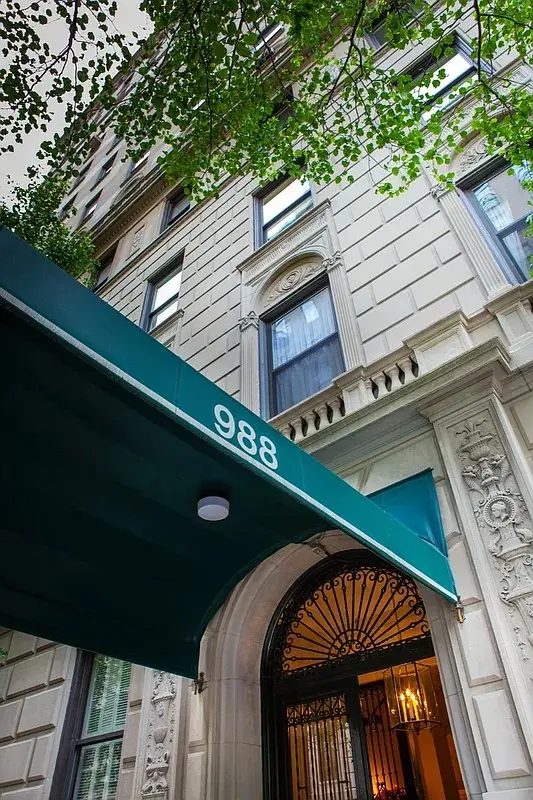
Built in 1926, 988 Fifth Avenue is a 14-story Italian Renaissance-style condominium designed by J. E. R. Carpenter. Located on the southeast corner of 80th Street, the building is distinguished by its detailed façade featuring rectangular quoins, arched window frames on the fifth floor, substantial balconies on the 11th floor, and a decorative balustraded roofline. Converted to a condominium in 1981, it remains one of the few on Fifth Avenue and offers views of Central Park and the Metropolitan Museum of Art. Developed by the Lion Brewery of New York, with Hugh A. Murray as president, the building reflects Carpenter's architectural finesse.
The exclusive building contains only 12 full-floor residences, providing a high level of privacy and service. Each unit comes with a designated storage bin, and residents benefit from amenities that include a doorman, sidewalk landscaping, and a pet-friendly policy. The sidestreet entrance further enhances the building's sense of discretion.
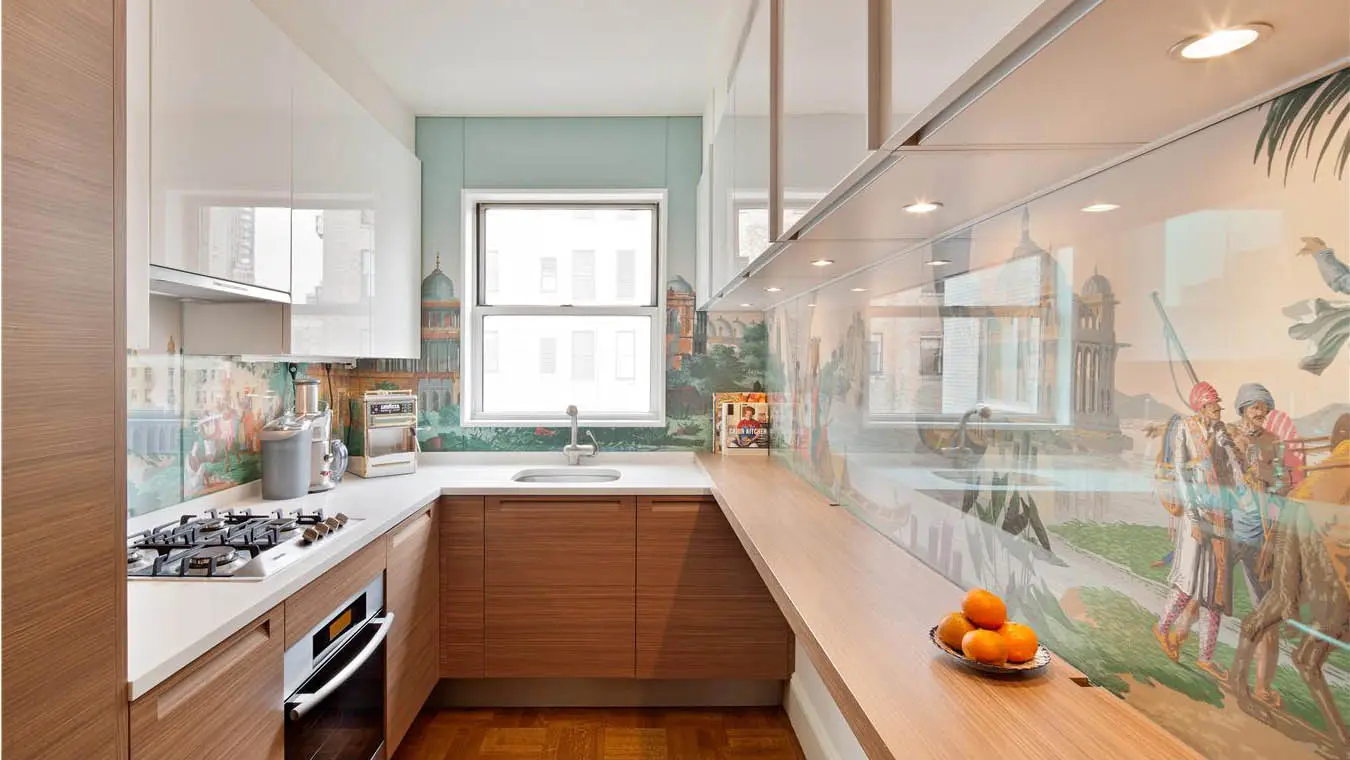
Apartments at 988 Fifth Avenue feature spacious layouts and elegant finishes. For example, a ninth-floor unit includes a 13-foot-wide entrance gallery, a 27-foot-wide living room with Central Park views, a library, a dining room, four bedrooms, a large kitchen, and a pantry. Another unit boasts an 11-foot-square circular foyer leading to a living room, library, dining room, media room, gallery, and four bedrooms, all with similar park-facing views.
Notable transactions at 988 Fifth Avenue include a $20 million sale by Barbara and Richard Shiffrin to Amy Abrams in 2011, and a $19.5 million sale by Selig Zises, founder of Integrated Resources, in 2012.
For screen reader users all content above is visible so you may ignore the show more button below.
Built in 1950 and designed by S.L. Bien, 923 Fifth Avenue stands as one of only four condominium buildings on Fifth Avenue between 60th and 80th Streets, making it exceptionally rare in this coveted stretch. The 21-story, 92-unit building was converted from rental to condominium in 1983 and features a distinctive white brick façade rising above a two-story limestone base. The elegant entrance leads to an attractive marble lobby with handsomely incised bronze elevator doors, and the building retains charming period details like mail chutes on each floor.
This full-service white-glove condominium offers 24-hour doorman service and elevator attendants, along with amenities including a fitness center, on-site garage, bike room, and storage facilities. Unlike many Fifth Avenue co-ops, 923 Fifth requires no board approval for purchases and allows both financing and subletting, making it particularly attractive to investors and pied-à-terre buyers. The building is pet-friendly and offers the convenience of in-unit washer/dryers in many apartments.
Apartments typically feature original herringbone hardwood floors, windowed kitchens, and generous closet space, with many units offering multiple exposures and abundant natural light. The most coveted units are the park-facing A, B, and C lines, which rarely come to market, while several apartments boast private terraces or balconies—though many of the original corner balconies have been enclosed over the years. The building's duplex units are particularly notable, with one featuring an extraordinary 837-square-foot wraparound terrace offering panoramic city and park views.
Situated at the prime intersection of Fifth Avenue and East 73rd Street, directly across from Central Park, residents enjoy immediate access to the park's attractions including the boat pond, as well as proximity to Museum Mile institutions and Madison Avenue's flagship stores. The building has attracted notable residents including Rolling Stones guitarist Keith Richards and model Vendela Kirsebom, reflecting its status as one of Manhattan's most prestigious addresses.
For screen reader users all content above is visible so you may ignore the show more button below.
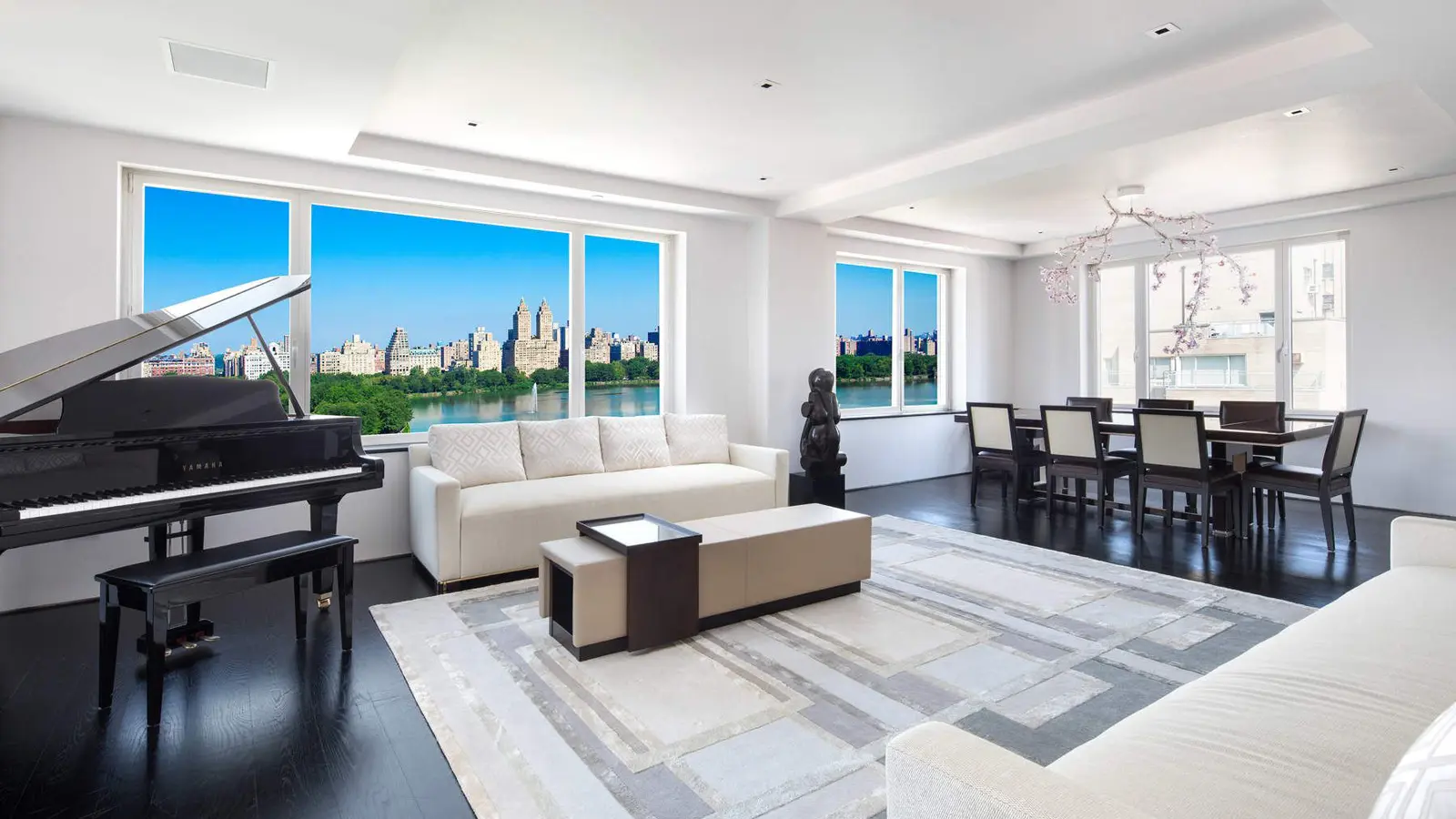
1049 Fifth Avenue merges an opulent pre-war style with state-of-the art finishes and technology.
It recently underwent an interior gut renovation that included substantial soundproofing between floors and apartments. With only 54 condominium residences on 23 floors, there are no more than three units per floor, with one floor designated for smaller staff apartments.
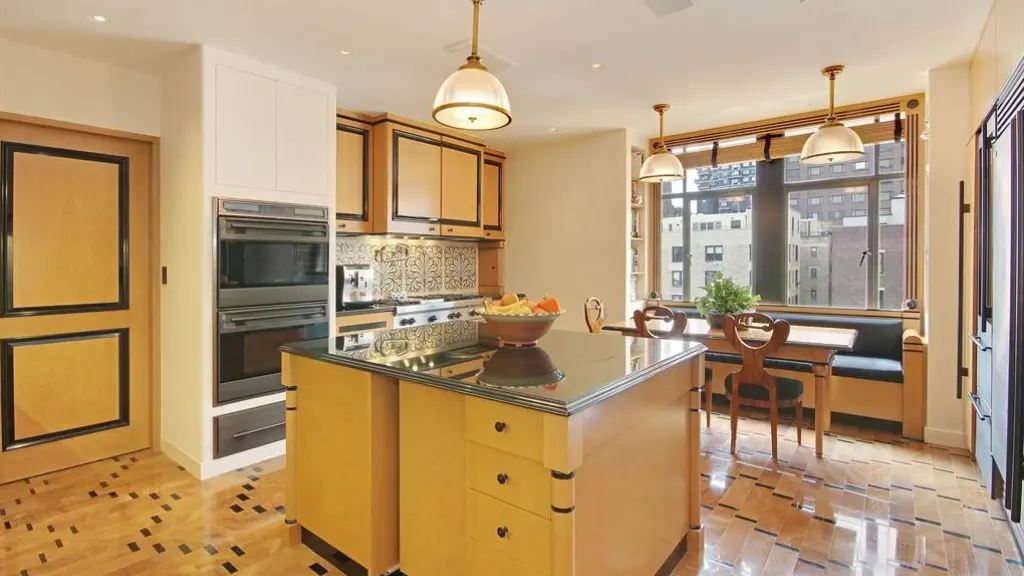
Residences are sprawling, averaging over 2,000 square feet. There are libraries with raised panel walls, coffered ceilings, Chicago windows with hand-operated panels, solid core raised panel doors, crown moldings and hand-laid rosewood herringbone patterned floors with ebony borders. Marble bathrooms have cherry wood raised panel cabinetry, double sink vanities and deep soaking tubs. Eat-in kitchens have top-of-the-line appliances, white marble and polished gray granite floors, full-size washers and dryers and butler’s pantries with warming ovens. Many residences have multiple terraces offering some of the best views in Manhattan of Central Park and the city.
It has a full-time doorman and concierge, private storage, attended elevators, a bicycle room and refrigerator storage for deliveries.
For screen reader users all content above is visible so you may ignore the show more button below.
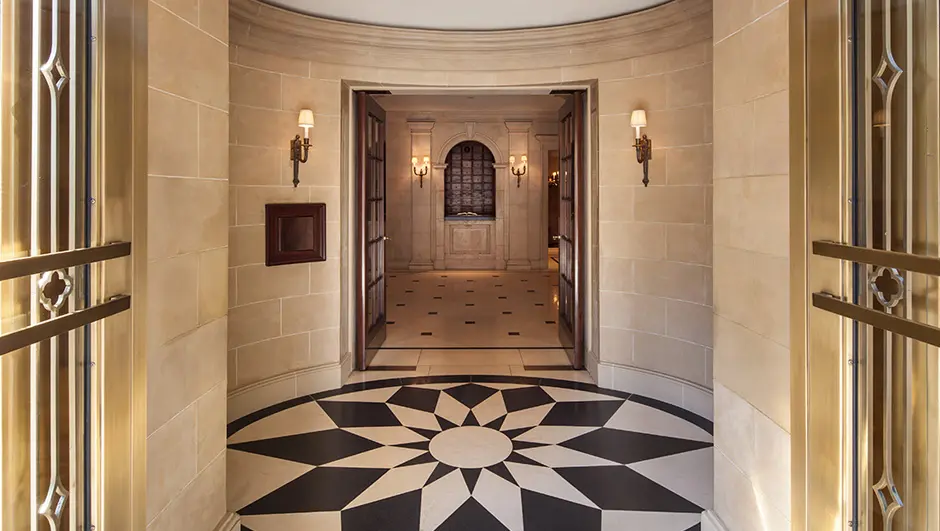
The Mayfair at 610 Park Avenue stands as one of Manhattan's most distinguished prewar condominiums, with a storied history that reflects the evolution of luxury living on the Upper East Side. Built in 1925 by renowned architect J.E.R. Carpenter, the building originally opened as the 450-room Mayfair House hotel and gained significant social cachet when Le Cirque restaurant opened on its ground floor in 1974, quickly becoming one of the city's most prestigious dining destinations. The building's conversion to a 68-unit condominium in 1997-1998 was remarkably successful, with units selling out based solely on floor plans before buyers could even enter the building. The conversion also brought Daniel Boulud's Michelin-starred Restaurant Daniel to replace Le Cirque, maintaining the building's reputation as a culinary destination.
The 15-story brown brick building with limestone base offers white-glove service including a 24-hour doorman, concierge, live-in resident manager, and valet parking. Residents enjoy access to a fitness center, optional maid service, and the unique amenity of room service from Restaurant Daniel, which caters exclusively to building residents. The building is pet-friendly, allowing up to two dogs of 20 pounds each, and maintains an intimate feel with fewer than 70 residences. Former New York City Mayor Jimmy Walker was among the building's notable residents.
Apartments at The Mayfair showcase classic prewar elegance with coffered 9-foot ceilings, seven-inch base moldings, and wood-burning fireplaces found in many units. The residences range from approximately 2,000 square feet to over 4,400 square feet, with larger units featuring multiple exposures and sweeping Park Avenue frontage. Common features include herringbone hardwood floors, marble bathrooms, custom built-ins and cabinetry, in-unit washer/dryers, and temperature-controlled wine storage. Many apartments boast chef's kitchens with top-tier appliances, formal dining rooms, libraries that can serve as additional bedrooms, and some units include private terraces.
Perfectly positioned at the corner of Park Avenue and 65th Street, The Mayfair offers residents proximity to Central Park, Madison Avenue's luxury boutiques, world-class museums, and easy access to multiple subway lines. The building's elegant sidestreet marquee, originally created in 1934, now serves as the entrance to Restaurant Daniel, while residents enter through a discrete Park Avenue entrance. This combination of architectural distinction, culinary prestige, and prime location has established The Mayfair as one of Park Avenue's most coveted addresses.
For screen reader users all content above is visible so you may ignore the show more button below.
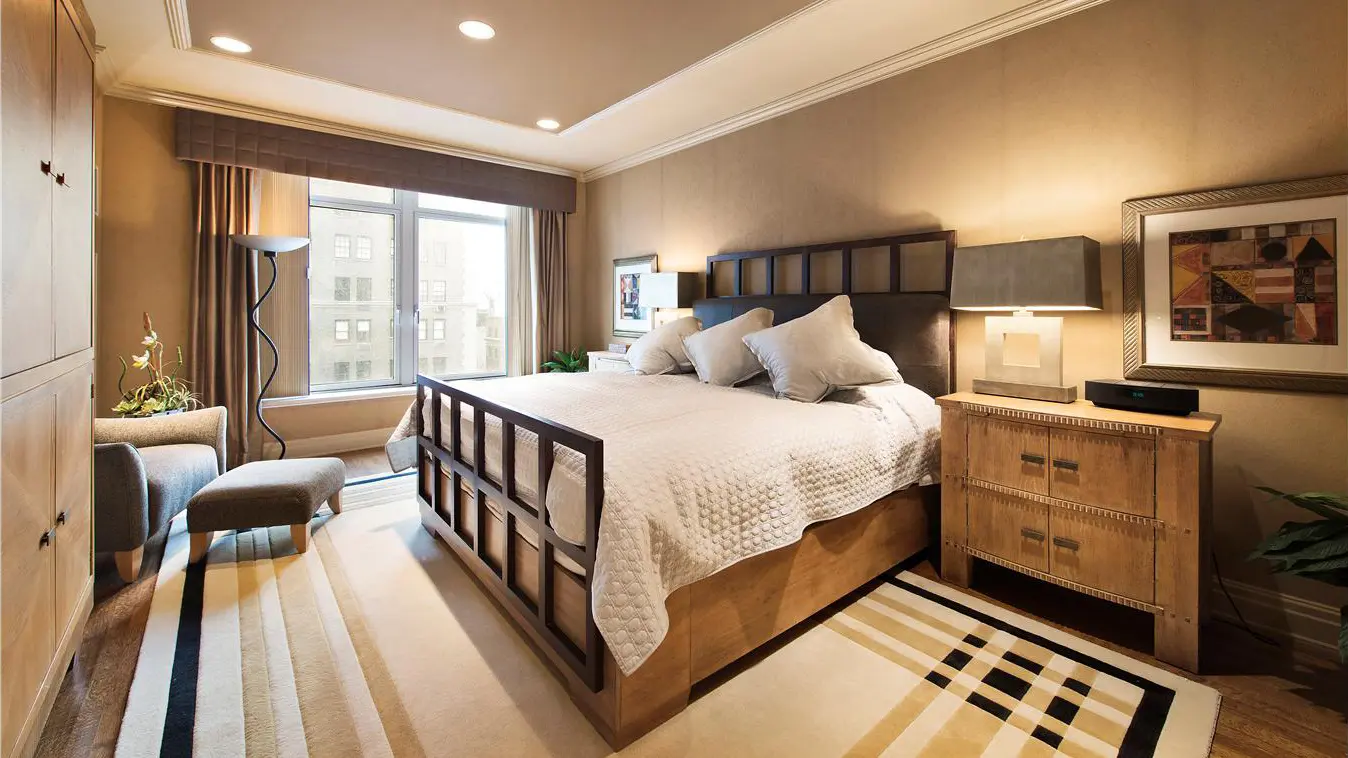
Completed in 2000, 515 Park Avenue stands as one of the tallest residential buildings on Park Avenue above 59th Street, rising 43 stories with only 30 apartments. Developed by the Zeckendorf General Partnership and designed by Frank Williams & Associates, this limestone and beige-brick tower replaced a pre-war Italian Renaissance palazzo, though its post-modern interpretation drew sharp criticism from architectural critics. Robert A.M. Stern described its silhouette as "awkward," while Paul Goldberger called it "particularly ungainly" with a "pretentious muddle" façade, despite its commercial success during the late 1990s luxury boom.
The building has attracted notable residents including theater impresario James L. Nederlander, luxury magnate François Pinault (owner of Christie's), music executive L.A. Reid, and Vivendi Universal chairman Jean-Marie Messier. Apartments showcase grand prewar-inspired proportions with 10 to 11.5-foot ceilings, herringbone hardwood and parquet de Versailles floors, and floor-to-ceiling windows offering Central Park and city views. Many units feature chef's kitchens with high-end Thermador, SubZero, and Miele appliances, marble and onyx bathrooms, and multiple bedrooms with en-suite baths. Twelve of the 38 apartments are duplexes, including spectacular 5,000-square-foot penthouses on floors 36-37 designed by renowned decorator Juan Pablo Molyneux, complete with private interior elevators and sweeping onyx staircases.
The building offers white-glove service with Chef Daniel Boulud as exclusive caterer, along with 15 private climate-controlled wine cellars, 38 storage rooms, and individual staff suites on the second floor for residents' use. Additional amenities include a state-of-the-art fitness center, private dining room with full catering kitchen, concierge and valet services, and 24-hour security. Located at the corner of Park Avenue and 60th Street, the building provides easy access to Central Park, Madison Avenue shopping, and Midtown's business district while maintaining the quieter residential character of the Upper East Side.
For screen reader users all content above is visible so you may ignore the show more button below.
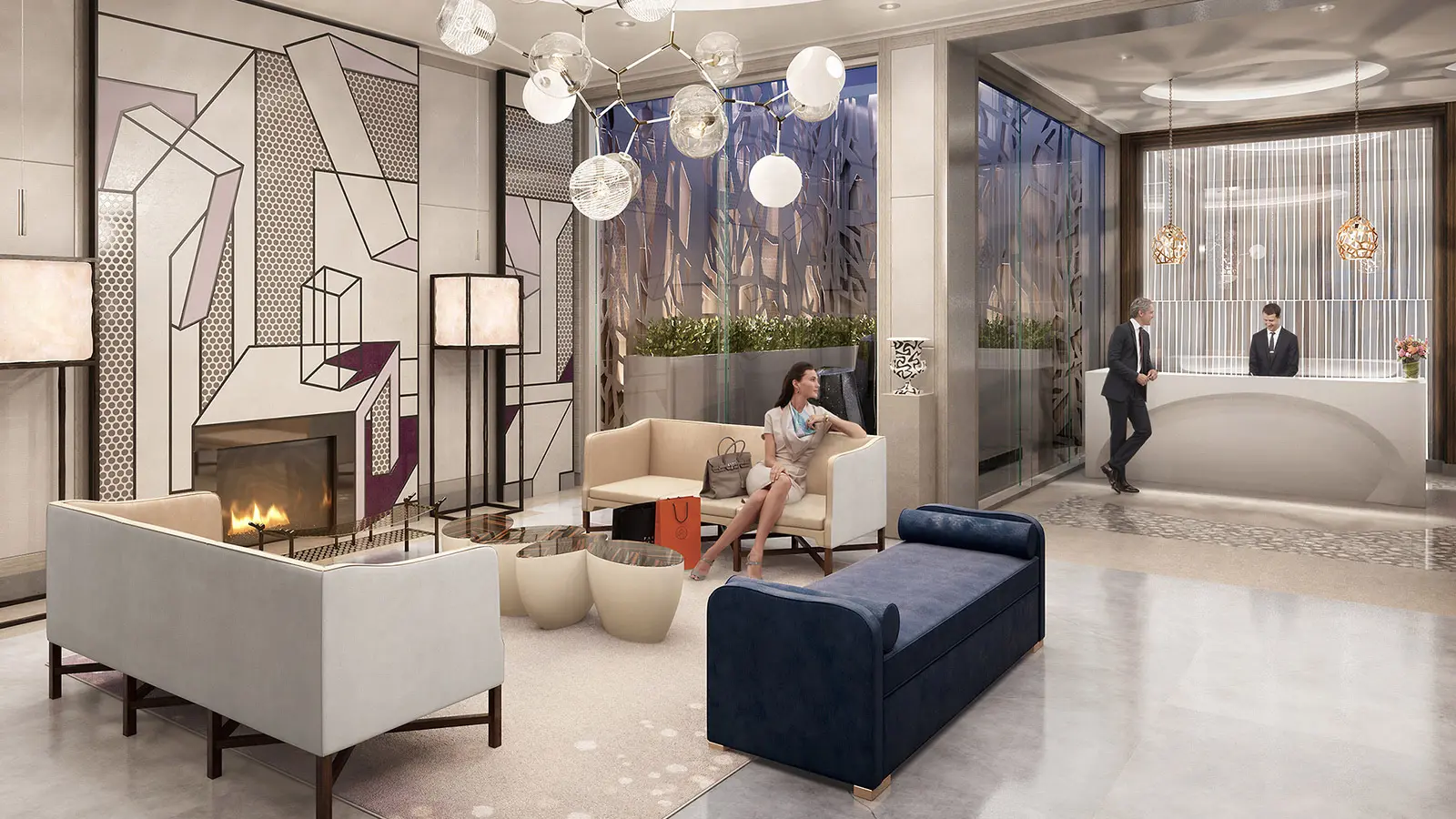
The Carlton House, located at 680 Madison Avenue at East 61st Street, was originally designed as a hotel by Kenneth B. Norton in 1950. In 2010, Extell Development and Angelo Gordon purchased the property for $170 million and undertook an extensive conversion, completed in 2013, transforming it into 68 luxury residences and one townhouse under the architectural direction of Beyer Blinder Belle.
The 16-story building features a distinctive brown-brick exterior with a three-story limestone base and handsome pilasters. The conversion included the addition of two infill buildings along its west side, ending its free-standing status, and the creation of a new five-story limestone townhouse on 61st Street that serves as both the main building entrance and a private residence.
Residents enjoy comprehensive amenities including 24-hour doorman and concierge service, a 65-foot heated indoor swimming pool, state-of-the-art fitness center, steam rooms, game room, bicycle storage, and cold storage. The building offers white-glove services and lifestyle management through Luxury Attache.
Apartments typically feature wide-planked white oak flooring, Miele and Sub-Zero appliances, custom lacquered cabinetry, marble finishes, and Waterworks fixtures. Many units offer split bedroom layouts, central air conditioning, and in-unit washer/dryers. The building's location, just a half block from Central Park and surrounded by Madison Avenue's luxury boutiques and fine dining, places it among Manhattan's most coveted addresses.
For screen reader users all content above is visible so you may ignore the show more button below.
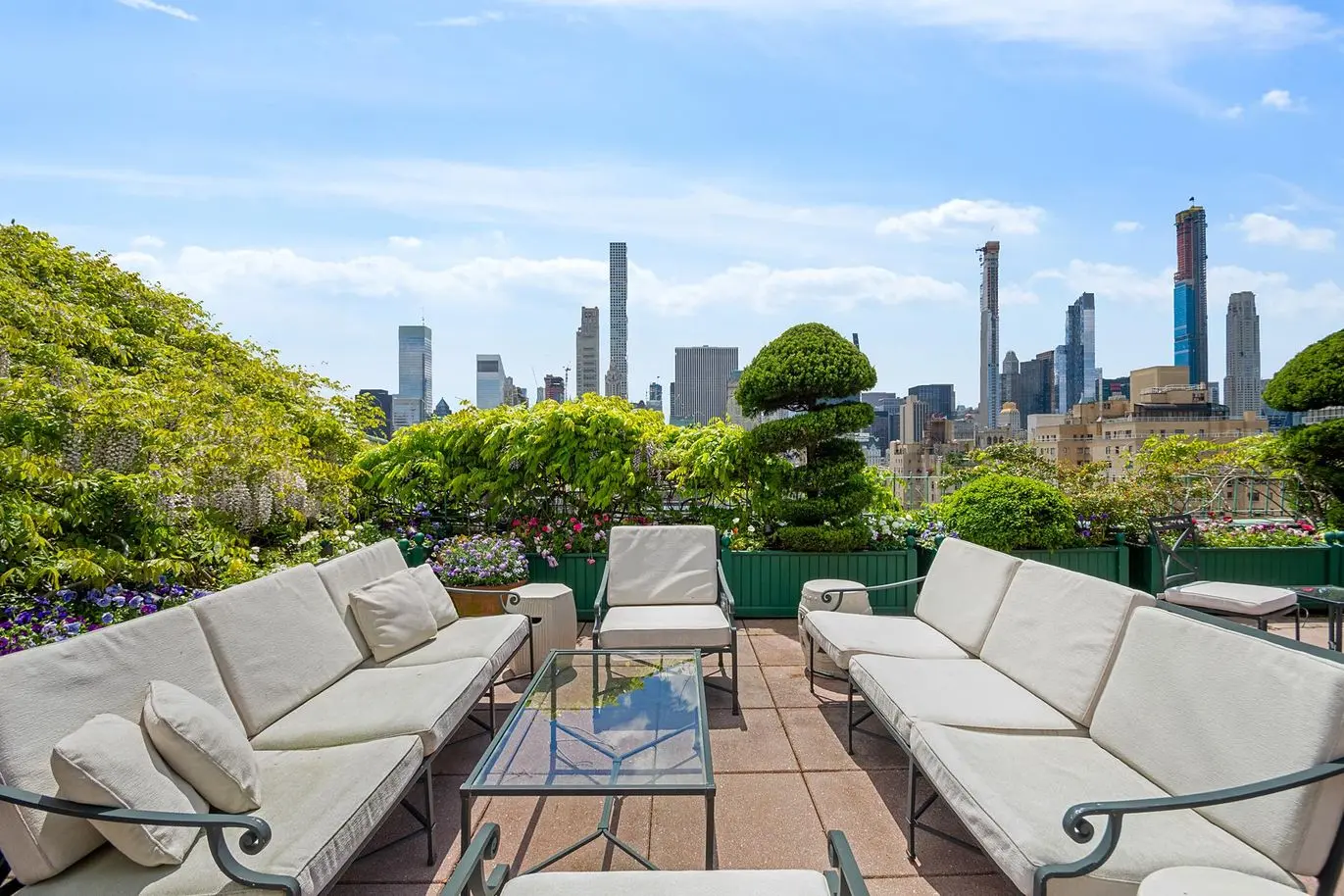
The Westbury stands as a distinguished prewar condominium at 15 East 69th Street, occupying a prime corner location on Madison Avenue just one block from Central Park. Originally constructed in 1927 as the Westbury Hotel and operated by Trust House Forte, this 18-story red brick building with limestone base was thoughtfully converted to just 47 luxury condominiums in 1999, maintaining only four residences per floor to ensure exclusivity and privacy.
The building's conversion preserved its hotel-caliber service standards, offering residents 24-hour concierge and doorman services, along with amenities including a fitness center, wine cellar with individual storage units, bicycle room, and optional maid service. The double-height lobby retains the elegance of its hotel origins, while the ground-floor retail spaces have housed prestigious tenants including Sulka, Alfred Dunhill, and Gucci, reflecting the building's position along one of Manhattan's most exclusive shopping corridors.
Residences at The Westbury typically feature elaborate entrance galleries, wood-burning fireplaces, and custom millwork that showcase classic prewar craftsmanship. Apartments range from approximately 1,600 to over 3,000 square feet, with many offering coffered ceilings, marble bathrooms, and custom closet systems. The crown jewel is a duplex penthouse with over 2,000 square feet of terraces providing panoramic city and skyline views. The building's location provides immediate access to Central Park, the Frick Collection, Madison Avenue's luxury boutiques, and some of the city's finest restaurants, while welcoming both pets and pied-à-terre ownership.
For screen reader users all content above is visible so you may ignore the show more button below.
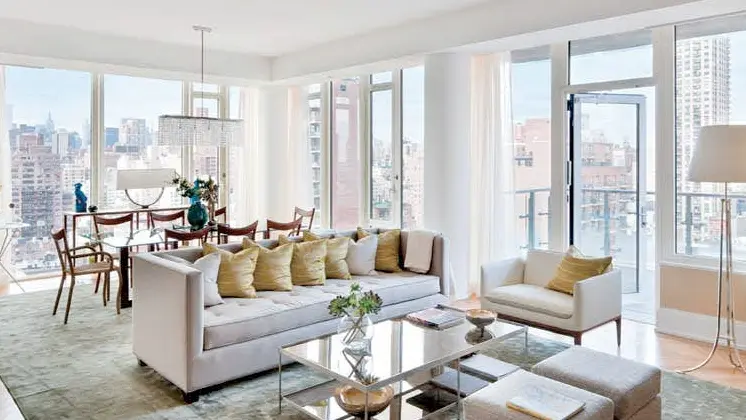
30 East 85th Street is located on the southwest corner of Madison Avenue.
Built in 1987 and designed by the architects of SLCE, the 30-story development mixes gracious style and premium amenities with a killer location. It is very close to Central Park and the Metropolitan Museum of Art. All 90 apartments offer spectacular views through large wall-to-wall windows, west toward Central Park, east toward the East River and south to the Midtown skyline. Many apartments have balconies or terraces to further enjoy the views.
Layouts run from studios to four-bedrooms with a few duplexes. All feature top-of-the-line finishes and details, including solid wood doors, cherry wood floors and plaster walls. Kitchens have topnotch appliances, with glass and ash-blond cabinets imported from France and sinks from Germany. Bathrooms, meanwhile, are fitted with marble walls and floors and whirlpool baths. Most apartments have washers and dryers.
30 East 85th Street features concierge service for its residents, who also share the use of a garage, storage and bike rooms. Memberships to the David Barton Gym on the second floor are also available.
For screen reader users all content above is visible so you may ignore the show more button below.
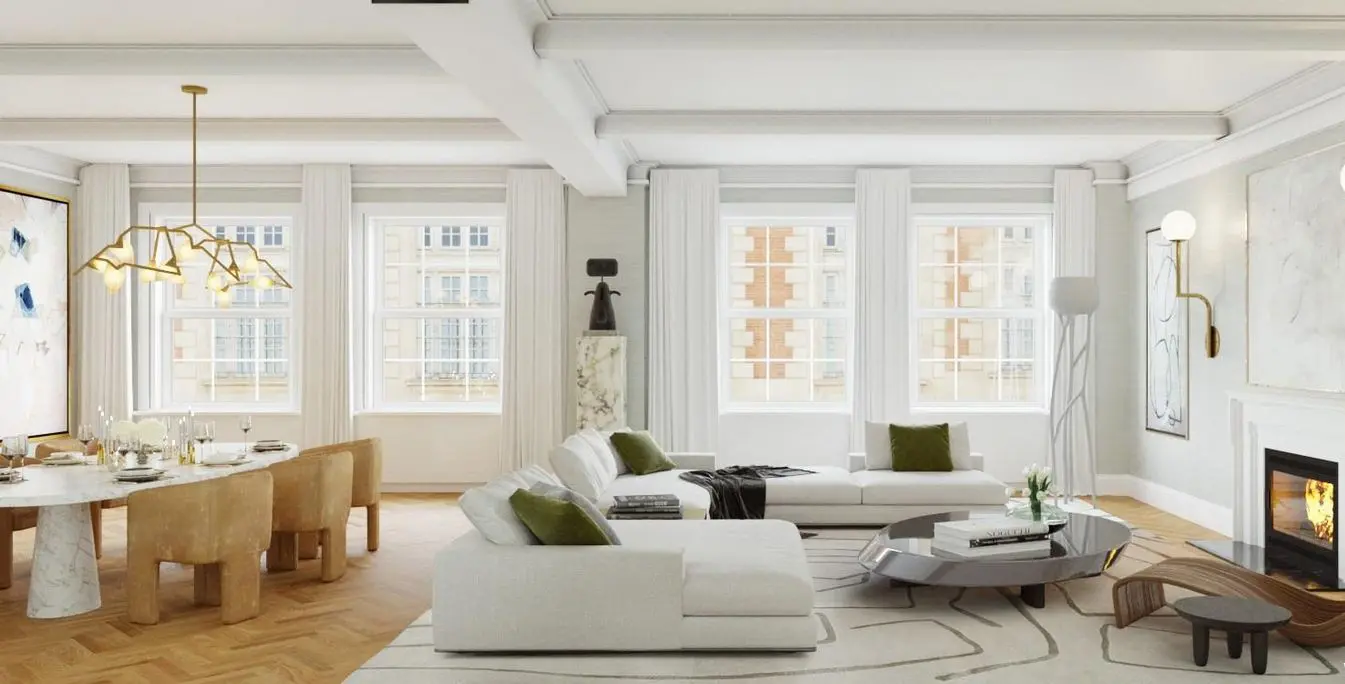
40 East 66th Street is a distinguished pre-war condominium designed by renowned architect Rosario Candela in 1929 and converted from rental units in 2008 by Vornado Realty Trust. The 13-story red-brick building, featuring a limestone base and decorative architectural details, houses 33 luxury residences in one of Manhattan's most coveted locations, just one block from Central Park.
The residences are characterized by generous proportions and classic Candela layouts, featuring wood-burning fireplaces, high-end appliances from Viking, SubZero, and Miele, and thoughtfully designed living spaces. Many units offer unique architectural elements typical of Candela's sophisticated design approach, including well-proportioned rooms and elegant flow between public and private spaces.
This white-glove building offers comprehensive amenities including 24-hour doorman and concierge service, a fitness room, children's playroom, bike room, central laundry, and private storage. Its prime Upper East Side location provides immediate access to Madison Avenue's luxury boutiques, fine dining establishments, art galleries, and cultural attractions, embodying the essence of sophisticated Manhattan living.
For screen reader users all content above is visible so you may ignore the show more button below.
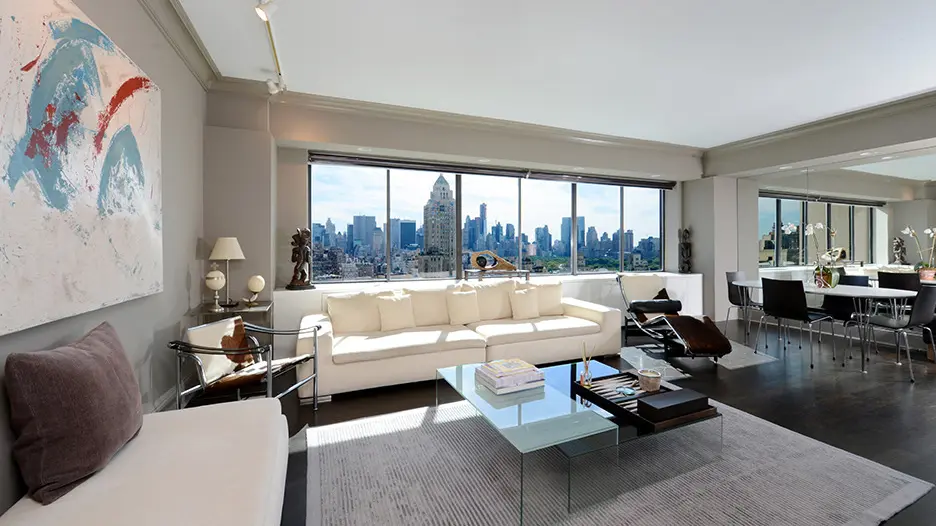
The Park 900, completed in 1973 and designed by Philip Birnbaum, stands as a 28-story limestone tower with 124 apartments at the prestigious corner of 79th Street and Park Avenue. This building was one of two structures that significantly pierced Park Avenue's traditional cornice line in the 1970s, replacing a grand 1917 mansion designed by John Mead Howells and Isaac Newton Phelps Stokes. Developed by Jack Resnick & Sons, the building features a distinctive landscaped plaza set below street level and is notable as one of the few condominiums on Park Avenue among the avenue's predominantly co-operative buildings.
Architecturally, the building sparked considerable controversy when constructed, with critics like Paul Goldberger calling it a serious violation of Park Avenue's spirit. However, time has softened these criticisms, and the building has become more accepted as part of the Upper East Side landscape. The plaza features a charming bronze cat sculpture by Botero, which replaced earlier works by Henry Moore and Francisco Zuniga. The building's circular driveway remains one of the most attractive landscaped driveways on Park Avenue, providing an elegant porte-cochère entrance.
Apartments typically feature expansive Park Avenue views, with many units offering multiple exposures and floor-to-ceiling windows that flood spaces with natural light. Common features include renovated chef's kitchens with high-end appliances (Sub-Zero, Viking, Miele), hardwood floors, marble bathrooms, and in-unit washer/dryers. Layouts range from one-bedroom units with dining alcoves to sprawling 4-bedroom residences approaching 5,000 square feet, with many apartments featuring separate dining areas, home offices, and custom built-in storage throughout.
The building operates as a white-glove, full-service condominium with 24-hour doorman, concierge, elevator operators, and live-in superintendent. Amenities include a recently renovated fitness center, new resident lounge, on-site parking garage with direct building access, and bike storage. Located just two blocks from Central Park and moments from Museum Mile, Madison Avenue shopping, and world-class dining, the building offers convenient access to multiple subway lines and crosstown buses.
For screen reader users all content above is visible so you may ignore the show more button below.
For screen reader users all content above is visible so you may ignore the show more button below.
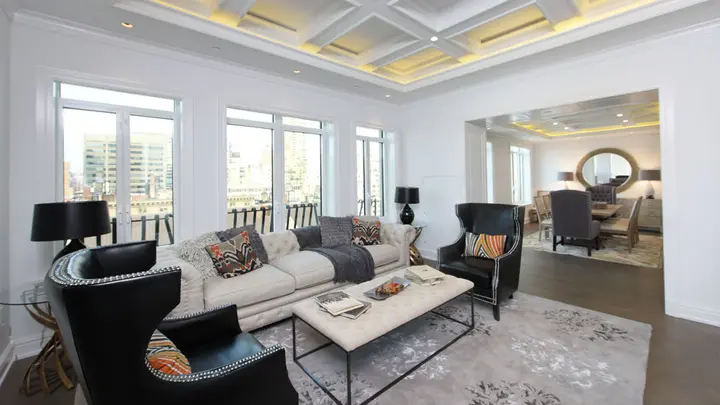
The Touraine is a 15 story boutique condominium at 132 East 65th Street on the southeast corner of Lexington Avenue, completed in 2013 by Toll Brothers. Designed by H. Thomas O'Hara with façade work by French born architect Lucien Lagrange, the building contains just 22 residences ranging from one bedroom units to a duplex penthouse. The architecture features a three story rusticated limestone base, setbacks at the 12th and 13th floors, and a mansard roof, with an arched two story entrance leading to a double-height lobby with a curved staircase and chandelier. The building's name was chosen for its French character after Toll Brothers rejected the previous developer's plan to call it Olivia.
Apartments feature enclosed kitchens with Calacatta marble countertops, Gaggenau appliances, and Sub-Zero refrigerators, along with eat in areas in many units. Bathrooms are outfitted with Waterworks fixtures and Italian Calacatta and Arctic gray marble. Ceilings range from 9.6 to 11 feet, with the penthouses enjoying the highest ceiling heights. Flooring includes 5 inch plank ash wood and herringbone patterns in some units. The duplex Penthouse 1 spans two floors with a fireplace, four bedrooms, and a private rooftop deck, while Penthouse 4 offers four bedrooms with 50 linear feet of living and entertaining space across the den, living, and dining rooms.
The building provides 24 hour concierge service, a residents library, a barrel vaulted wine cellar with private lockers for over 100 bottles, a fitness center, and a landscaped rooftop terrace with an outdoor fireplace. Additional amenities include refrigerated storage, bicycle storage, personal storage bins, and a package room. Many units benefit from a 421-A tax abatement, and the building is pet friendly. The location offers proximity to Central Park, Madison Avenue shopping, and the Lexington Avenue subway.
For screen reader users all content above is visible so you may ignore the show more button below.
For screen reader users all content above is visible so you may ignore the show more button below.

 6sqft delivers the latest on real estate, architecture, and design, straight from New York City.
Like us on Facebook to keep up with the trends and
6sqft delivers the latest on real estate, architecture, and design, straight from New York City.
Like us on Facebook to keep up with the trends and 