
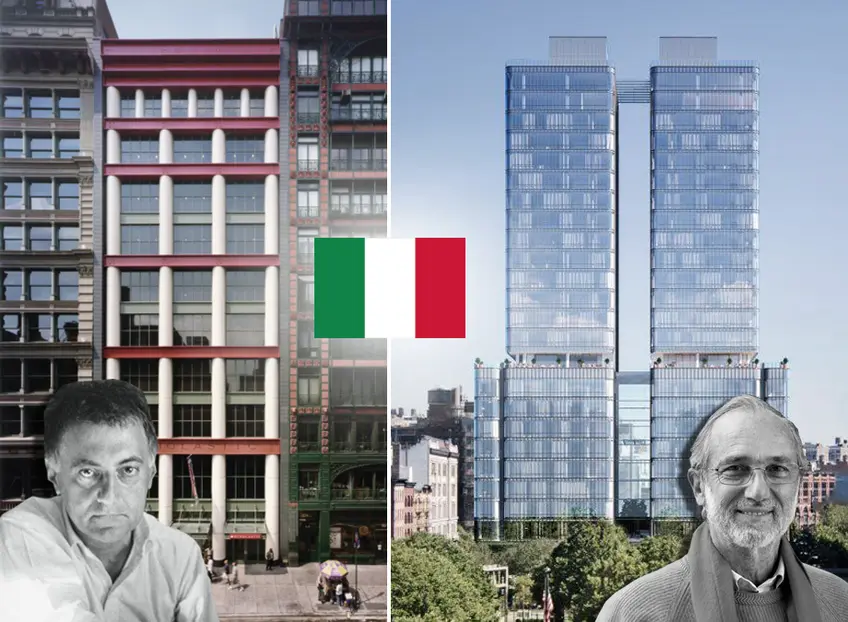
 When walking through New York, the work of Italian designers goes beyond high-end boutiques (The Scholastic Building via Wiki Commons; 565 Broome Street via Douglas Elliman)
According to Pew Research, the second Monday in October is one of America's most inconsistently celebrated days: Only 16 states and American Samoa celebrate the day exclusively as Columbus Day, while several others have started to celebrate it as Indigenous People's Day in addition to or in lieu of Columbus Day amidst controversy surrounding Christopher Columbus' legacy. At least one city has made Election Day a paid holiday by swapping out Columbus Day, and lawmakers in the House and Senate reintroduced legislation to replace Columbus Day with Indigenous People’s Day in October 2023.
In this article:

At the same time, other activists note that Columbus Day originated in response to anti-Italian sentiment, and continue to honor the day as a celebration of Italian heritage. In 2021, when President Biden formally recognized the second Monday of October as Indigenous People's Day, he also issued a separate proclamation marking the achievements and contributions of Italian-Americans. Indeed, the entire month of October was designated Italian-American Heritage and Culture Month starting in 1989.
New York City seems to be having it both ways: The 2024 event marks the 80th Annual Columbus Day Parade that has been touted as the world's largest celebration of Italian-American heritage. At the same time, an event commemorating Indigenous People's Day is being held on Randall's Island on October 14.
New York public schools and government offices are closed today in honor of both Indigenous People’s Day and Italian Heritage Day. The stock market, many retailers, and some bank branches are open; but because Columbus Day is a federal holiday, government agencies like the DMV, the post office, libraries, and courts are closed.
New York public schools and government offices are closed today in honor of both Indigenous People’s Day and Italian Heritage Day. The stock market, many retailers, and some bank branches are open; but because Columbus Day is a federal holiday, government agencies like the DMV, the post office, libraries, and courts are closed.
 A greatly expanded Italian American Museum, at the base of the Morris Adjmi-designed Grand Mulberry, will open in October 2024. (Italian American Museum)
 Manteo marionettes on display in Italian-American Museum (Christopher Nealon for the Italian American Museum)
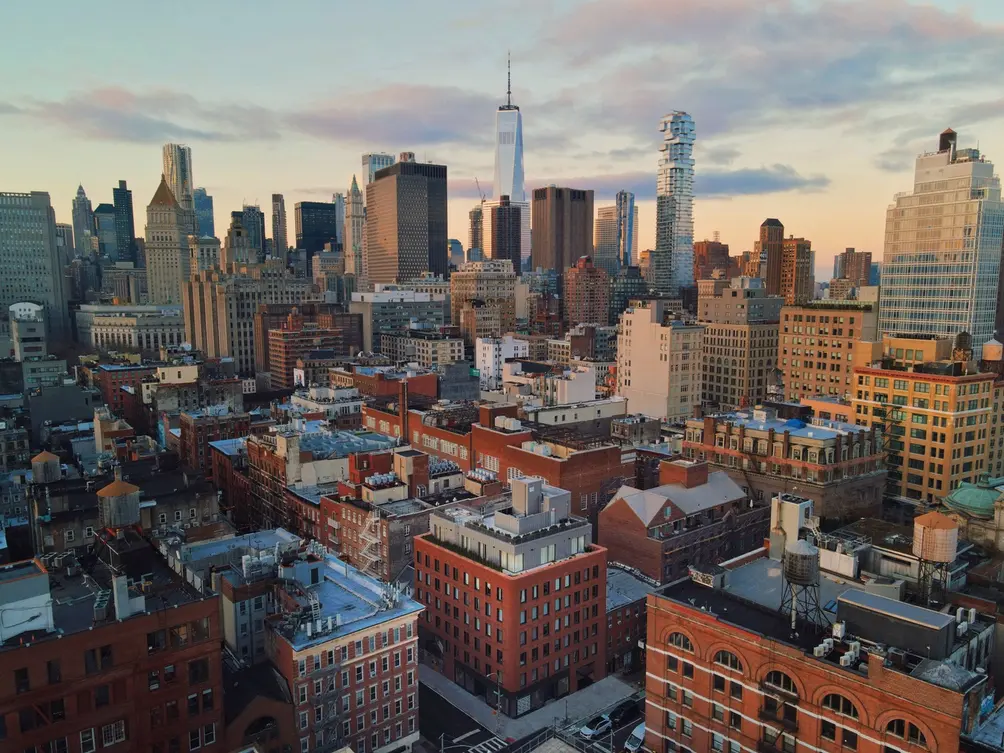 The museum will open at the base of The Grand Mulberry designed by Morris Adjmi Architects
One institution that will be open is the Italian American Museum, which opens its doors today following a soft opening at the beginning of the month. The first exhibits will include "Sicilian Theater in Little Italy: The Return of the Manteo Puppets," which displays marionettes from the former Manteo Theater. Additional exhibitions will include a tribute to Italian-American garment workers called "Goodnight, Maria" as well as "The Quincentenary: The Voyages of the Italian Explorer Giovanni da Verrazzano."
In early 2017, the Italian-American Museum sold its site to the developers of luxury condominium The Grand Mulberry for $14.8 million. As part of the deal, the museum was granted a larger space in the new building rent-free in perpetuity.
In early 2017, the Italian-American Museum sold its site to the developers of luxury condominium The Grand Mulberry for $14.8 million. As part of the deal, the museum was granted a larger space in the new building rent-free in perpetuity.
Beyond the doors of the Italian-American Museum, the influence of Italians on American culture is evident in New York's most popular food and fashion. The iconic Battery Maritime Building has been spiffed up and partially redeveloped into Casa Cipriani. And Eataly branches all over the city remain must-visit draws for locals and tourists alike. Eataly Soho opened in December 2023, and a new location is in the works for the fourth floor of Hudson Yards.
Additionally, many of the classical building styles favored throughout New York are derived from ancient Rome, and the intricate craftsmanship on some of the more ornate prewar buildings can be credited to Italian artisans. The Metropolitan Life Building was directly inspired by St. Mark’s Campanile in Venice, and countless buildings and clubs have been inspired by Italian palazzi. This is not confined to the past; Italian-born architects are still behind some of the city’s most noteworthy new architectural additions today. Below, see a list of some of the latest NYC projects by Italian architects.
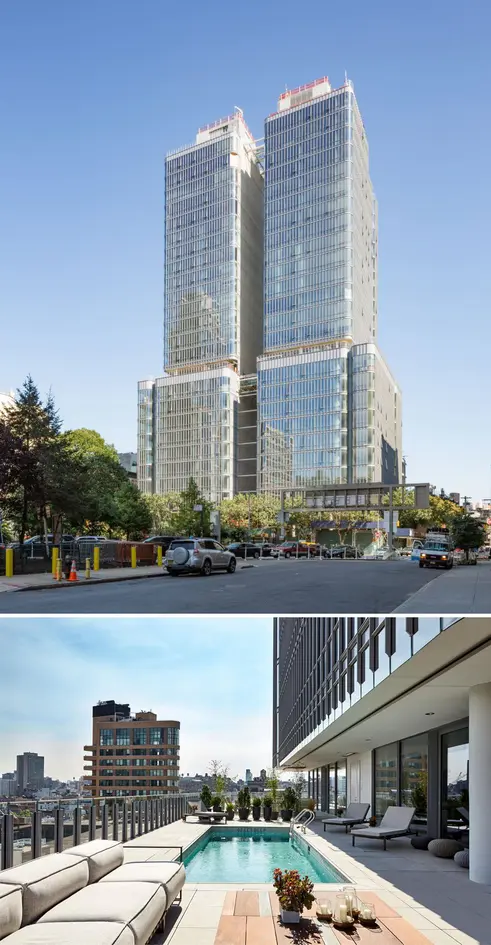 565 Broome Soho via Andrew Campbell Nelson
565 Broome Soho, 565 Broome Street
Neighborhood: Soho
Architect: Renzo Piano Building Workshop
9 studio through four-bedroom availabilities from $1.5M - $15.995M
The past few years have seen Hudson Square transform from an industrial to a residential neighborhood with 565 Broome Soho leading the charge. As Pritzker Prize laureate Renzo Piano Building Workshop’s first residential building in New York, the two-towered design’s glass facade gracefully curves at the corners is said to take on the color of the weather, and allows for spectacular skyline and river views.
All units boast high ceilings, gracious layouts, chef's kitchens, luxe baths, and generous closet space. A double-height attended lobby welcomes residents, and additional amenities include automated parking for purchase, a fitness center with yoga studio, lap pool with a steam room and sauna, children’s playroom, and lounge with green wall and library. It has already attracted the likes of tennis star Novak Djokovic and Uber founder Travis Kalanick.
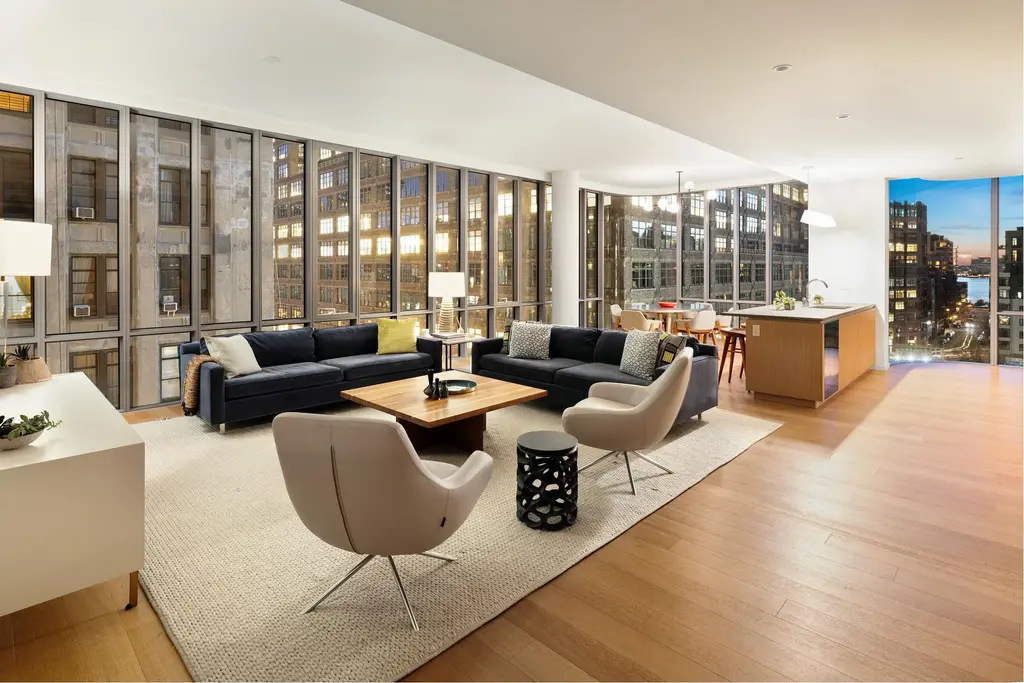
565 Broome SoHo, #S10C (Douglas Elliman Real Estate)
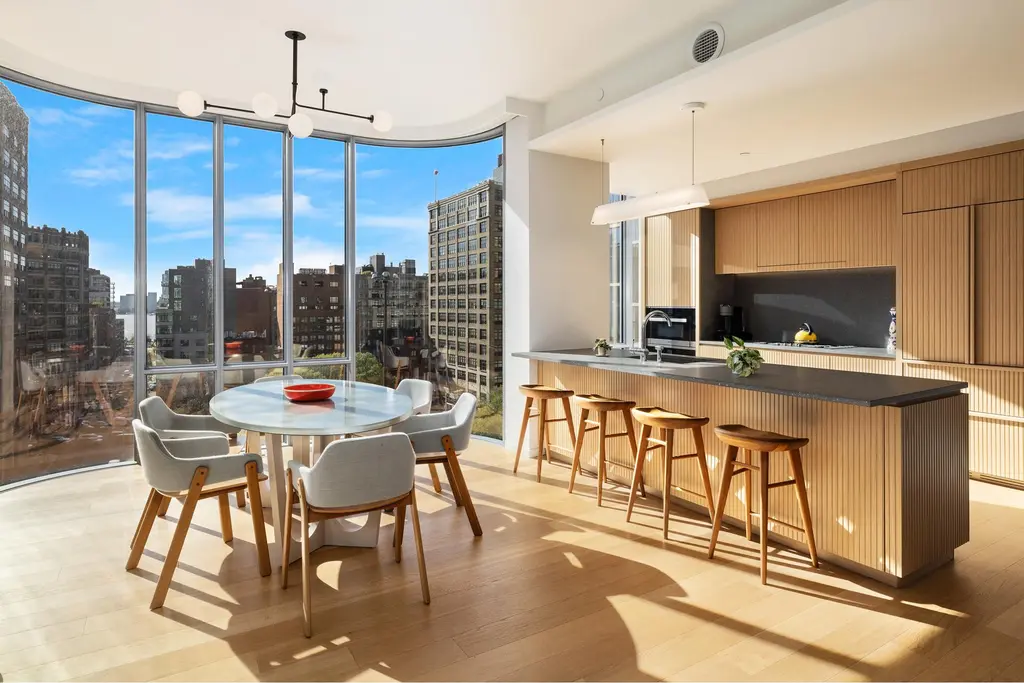

75 First Avenue
Neighborhood: East Village
Interior Architect: Stefano Pasqualetti
5 one- through three-bedroom availabilities from $1.29M - $5.15M
At 75 First Avenue, a glassy new condo cantilevering over a neighboring Rite Aid makes a modern statement on its East Village block. Interiors by architect/photographer Stefano Pasqualetti, whose resume includes work with David Chipperfield Architects and Peter Marino Architects, feature abundant natural light, airy open-plan layouts, custom kitchens, and primary baths with high-end finishes.

75 First Avenue, #PHA (Serhant LLC)

Would you like to tour any of these properties?
Just complete the info below.
Or call us at (212) 755-5544
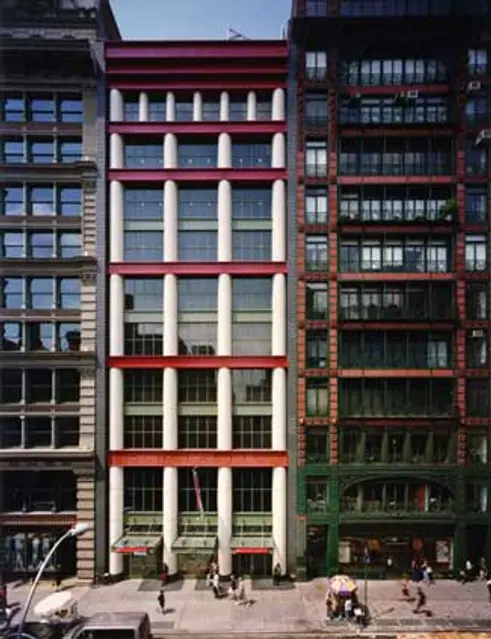 The Scholastic Building via Gensler
The Scholastic Building, 565 Broadway
Neighborhood: Soho
Architect: Aldo Rossi
To look at the Scholastic Building from the bustling street, it would appear that it has always been in the Soho Cast-Iron Historic District. However, the site went from a one-story garage to a ten-story steel, terra cotta, and stone structure designed by Pritzker Prize laureate Aldo Rossi, who has been described as “a poet who happens to be an architect.” It may have been Mr. Rossi’s first and only New York building, but Landmarks approved the design within an hour of completion. Following his untimely death in 1997, protege Morris Adjmi oversaw the building's design through to opening day.
 Credit: David Sunberg of Esto
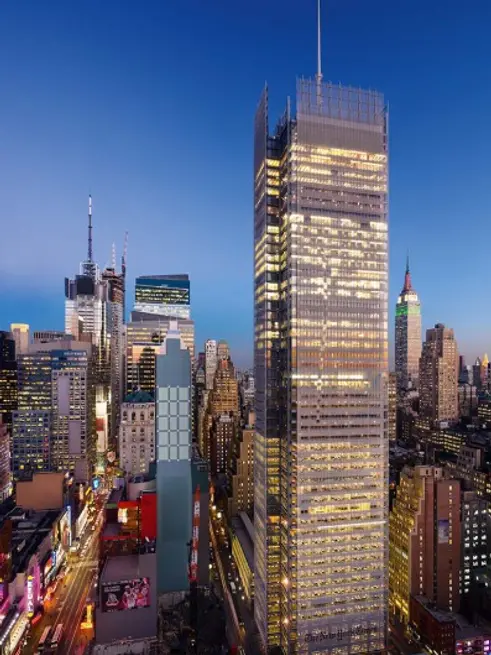
The New York Times Building, 620 Eighth Avenue
Neighborhood: Midtown West
Architect: Renzo Piano Building Workshop
Times Square may have been named after its most famous tenant, but it didn’t take long for The New York Times to outgrow its original space at One Times Square. Nearly a century later, its new headquarters breathed new life into a derelict stretch of Midtown across from the Port Authority Bus Terminal. The design by Renzo Piano Building Workshop incorporates several environmentally friendly features for increased energy efficiency.
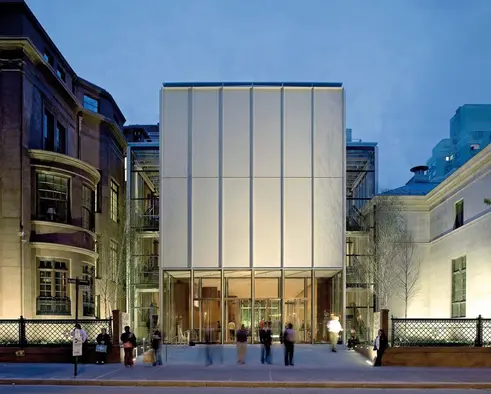 The Morgan Library entrance and annex courtesy of Renzo Piano Building Workshop/ The Morgan Library & Museum
The Morgan Library and Museum, 225 Madison Avenue
Neighborhood: Murray Hill
Architect: Renzo Piano Building Workshop
The Morgan Library and Museum was originally designed to house J.P. Morgan’s private library and art collection, but today serves as a public museum and scholarly research center. When it was time to usher the Classical Revival building by McKim, Meade & White into the 21st century, the museum turned to Renzo Piano. A modernist entrance building isn’t much to look at from street level, but allows for greater organization and exhibition space.
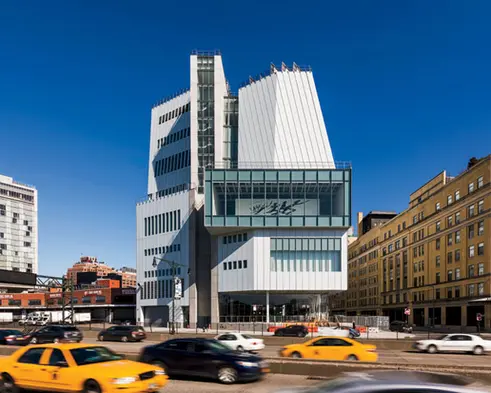 The Whitney Museum (Jeff Goldberg of Esto)
The Whitney Museum of American Art, 99 Gansevoort Street
Neighborhood: West Village
Architect: Renzo Piano Building Workshop
After years of trying to expand its landmark building on the Upper East Side, the Whitney Museum of American Art started anew in the Meatpacking District. Five years of construction later, an airy, expansive new structure opened near the southern entrance of the High Line. The design by Renzo Piano Building Workshop offers New York’s largest column-free art gallery space, two stories devoted to the museum’s permanent collection, and an eighth-floor cafe and outdoor terraces overlooking the Hudson River and historic Greenwich Village streets.
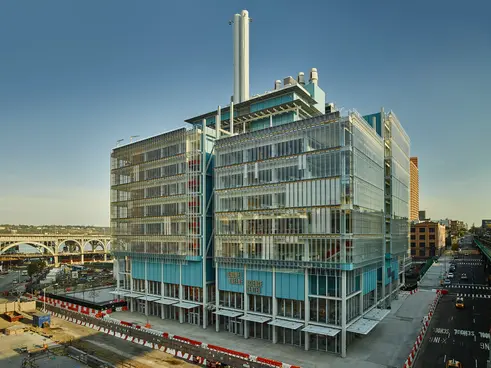 The Jerome L. Greene Science Center via Columbia University
The Jerome L. Greene Science Center, Columbia University
Neighborhood: Harlem
Architect: Renzo Piano Building Workshop
In the heart of Columbia University’s new Manhattanville campus, Renzo Piano Building Workshop’s designs make a dramatic statement in the heart of Harlem. The boldest of these is the Jerome L. Green Science Center, which is the largest building Columbia has ever undertaken and the biggest academic science building in New York. The glass-enclosed, sustainably designed building hosts the Zuckerman Mind Brain Behavior Institute, innovative common spaces, an education lab, a community wellness center, and street-level retail and restaurants.
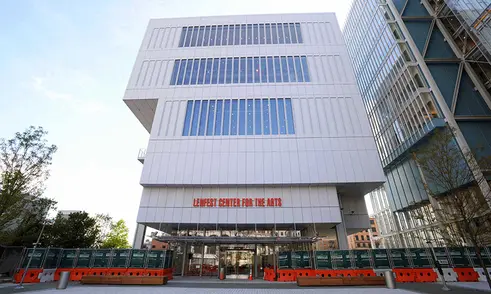 Lenfest Center for the Arts via Columbia University
Lenfest Center for the Arts, Columbia University
Neighborhood: Harlem
Architect: Renzo Piano Building Workshop
Up the street from the Jerome L. Green Science Center, the Lenfest Center for the Arts hosts all sorts of exhibitions, screenings, and symposia, not to mention the Miriam & Ira D. Wallach Art Gallery. The architectural team behind the science center created an eight-story building with soaring ceilings, open and column-less spaces, and careful control of natural light.
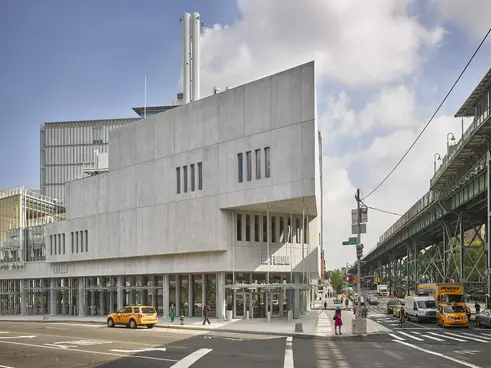 The Forum via Columbia University
The Forum, Columbia University
Neighborhood: Harlem
Architect: Renzo Piano Building Workshop
The goal of Columbia’s Manhattanville campus was always to foster a stronger connection between the university and the local community, and the Forum, a 430-seat auditorium, epitomizes that goal by creating a shared meeting space that hosts scholars and thought leaders in all fields. While the auditorium itself needs opaqueness, the offices on top require daylight. The design by Renzo Piano Building Workshop masterfully incorporates both.
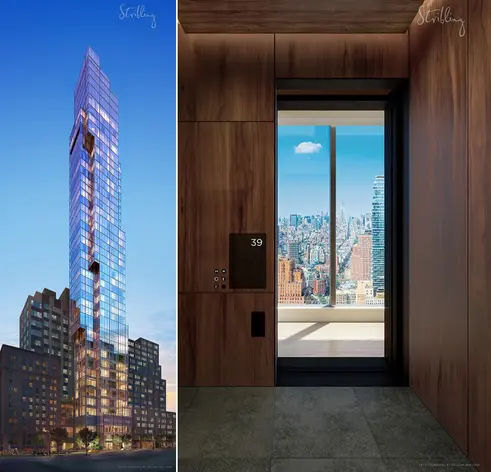 45 Park Place interior renderings via Williams New York
45 Park Place
Neighborhood: Tribeca
Architect: SOMA Architects; interiors by Pietro Lissoni
Architect and designer Pietro Lissoni, best known for his work on projects ranging from yachts to showrooms to products, took his talents to the interiors of a very delayed Tribeca tower. In an interview with Architectural Digest, he described a desire “to create a space that is elegant and contemporary, while evoking a sense of home.” He has certainly achieved that with high-end materials, nods to the neighborhood, and utmost attention to detail. Construction of the project has been stalled for several years and it is unknown when work will resume.
Would you like to tour any of these properties?
Just complete the info below.
Or call us at (212) 755-5544
Would you like to tour any of these properties?

 6sqft delivers the latest on real estate, architecture, and design, straight from New York City.
